
A Grazing Property in Transition: North East Victoria
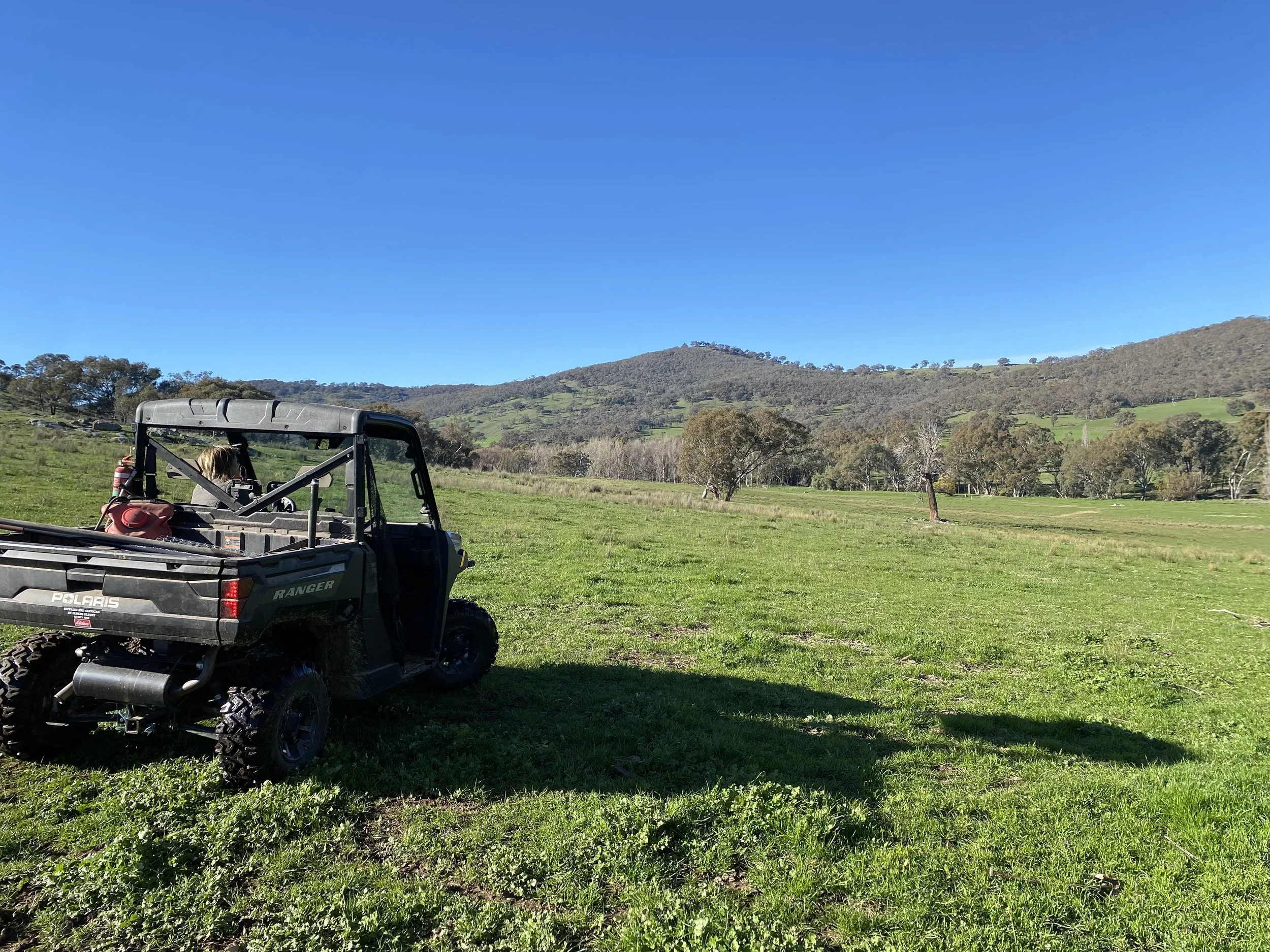
A couple run a 49-hectare cattle grazing property in north-east Victoria. They came to Courtney at Tenderground with clear goals: grow more grass sustainably, raise healthy cattle, build climate resilience, and increase biodiversity across the property. They wanted a clear step-by-step plan.
What we found
In winter 2025, Courtney conducted visual assessments alongside soil and plant testing across four paddocks. The picture that emerged was consistent: a farm with real potential held back by a cluster of interconnected issues.
Groundcover was good, but pasture biomass was low and plant diversity limited. Most paddocks showed significant soil compaction, shallow rooting depths and acidic pH levels between 5.03 and 5.12. The abundance of weed species (pin rush, fleabane, capeweed, sorrel) were further proof that compaction, low calcium, and disrupted soil biology was an issue.
Mineral testing across all four paddocks revealed widespread deficiencies in calcium, magnesium, phosphorus, copper, molybdenum, boron, and selenium, alongside elevated iron, manganese, and potassium. The cattle were generally calm, but some showed coat discolouration consistent with copper deficiency, and one animal carried a significant liver fluke burden.
The good news: organic matter levels in the top 10cm provided a solid foundation, ranging from 5.18% to 6.97% depending on the paddock. One paddock, which had received a recent lime application, showed markedly better mineral balance than the rest. This gave the managers confidence to lime again but at a lower rate to save on costs.
The approach
Rather than prescribing a list of inputs, Tenderground structured the work around the ESR framework (Efficiency, Substitution, Redesign) and the five Ms that drive farm health, drawing on Integrity Soil’s work: organic matter, minerals, microbes, management, and mindset.
The priority was not to fix everything at once, but to sequence interventions strategically, starting with the lowest-cost, highest-impact changes. Overgrazing was identified as the primary limiting factor, underpinning compaction, poor plant recovery, low biodiversity, and compromised animal health. Without addressing grazing management, other interventions would have limited impact.
The action plan works across several focus areas over a three-year horizon. It begins with improving monitoring and grazing management, then progresses to soil amendments (including lime and soft rock phosphate), multispecies pasture establishment, biological inputs, and revegetation and creek restoration.
Key recommendations included refining the grazing plan to ensure full plant recovery before re-grazing; increasing effective paddock numbers using portable fencing; providing targeted mineral supplementation for livestock; sowing multispecies annual pastures; applying dolomite lime to address acidity and calcium deficiency; and transitioning away from synthetic nitrogen and phosphorus inputs to better support soil biology.
The report also addressed the financial dimension directly. For smaller grazing operations, profitability depends on understanding true per-head costs, aligning stocking rates with carrying capacity, and treating soil health as a long-term asset rather than a short-term expense.
Where things stand
The farm is early in its transition, but the trajectory is positive. Work already undertaken, including creek protection, reducing harmful inputs, and maintaining groundcover, reflects the mindset that underpins regenerative farming: patient, observant, and systems-focused.